The Best Surf Spots in Fuerteventura for Beginners and Intermediates
Planning a surf trip to Fuerteventura but not sure exactly where to paddle out? Finding the right surf spots in Fuerteventura can make the difference between a frustrating session and one where everything finally clicks.
The island is famous among experienced surfers for its powerful winter swells, but it is also genuinely one of the best places in Europe to learn. If you are looking for the ideal beginner surf spot in Fuerteventura, the key is knowing where to find soft, forgiving waves instead of heavy, unforgiving reef breaks.
Choosing the wrong spot on the wrong day can turn a good session into a scary one, or worse, an unsafe one. That is why understanding the island’s coastline, and how each spot behaves, is essential before you even get in the water. If you would rather explore these spots with Private Surf Coaching than figure it all out alone, that option is always there.
Sand vs Volcanic Reef: What You Need to Know
Before looking at specific beaches, there is one thing every surfer should understand: the difference between sandy bottoms and volcanic reef. Among the best intermediate surf spots in the Canary Islands, you will find both, and the difference matters more than most people realise.
Sand is forgiving. If you fall, and you will fall a lot when you are learning, a sandy seabed simply lets you get back up and try again. Volcanic reef is a different story. The lava rock underneath can be sharp, shallow and unforgiving, and it demands a level of control and wave knowledge that beginners simply have not built yet.
As a general rule, if you are a beginner or an early intermediate surfer, stick to sandy bottoms first. Build your foundations there before you even think about reef breaks.
The Best Sandy Breaks for Beginners and Intermediates
Here are two spots worth knowing, depending on your level and the conditions of the day. Playa del Moro, located inside the Corralejo Dunes Natural Park, is one of the best spots for beginners on the island. At low tide, the whitewater here is soft and consistent, perfect for practising your pop-up without the pressure of a demanding wave. At mid tide, depending on swell direction and wind strength, the wave can open up enough to challenge more experienced surfers too, which makes it a genuinely versatile spot.
Piedra Playa, the beach break in El Cotillo, works particularly well during the summer and autumn months when the swells are smaller and gentler. When the sandbanks are in good shape, it offers soft whitewater ideal for beginners, and depending on the size of the swell, it can also provide fun, workable waves for intermediate and advanced surfers.
Both of these spots share the same sandy bottom that makes them safer for anyone still building confidence in the water.
When You Are Ready for Reef: Punta Blanca
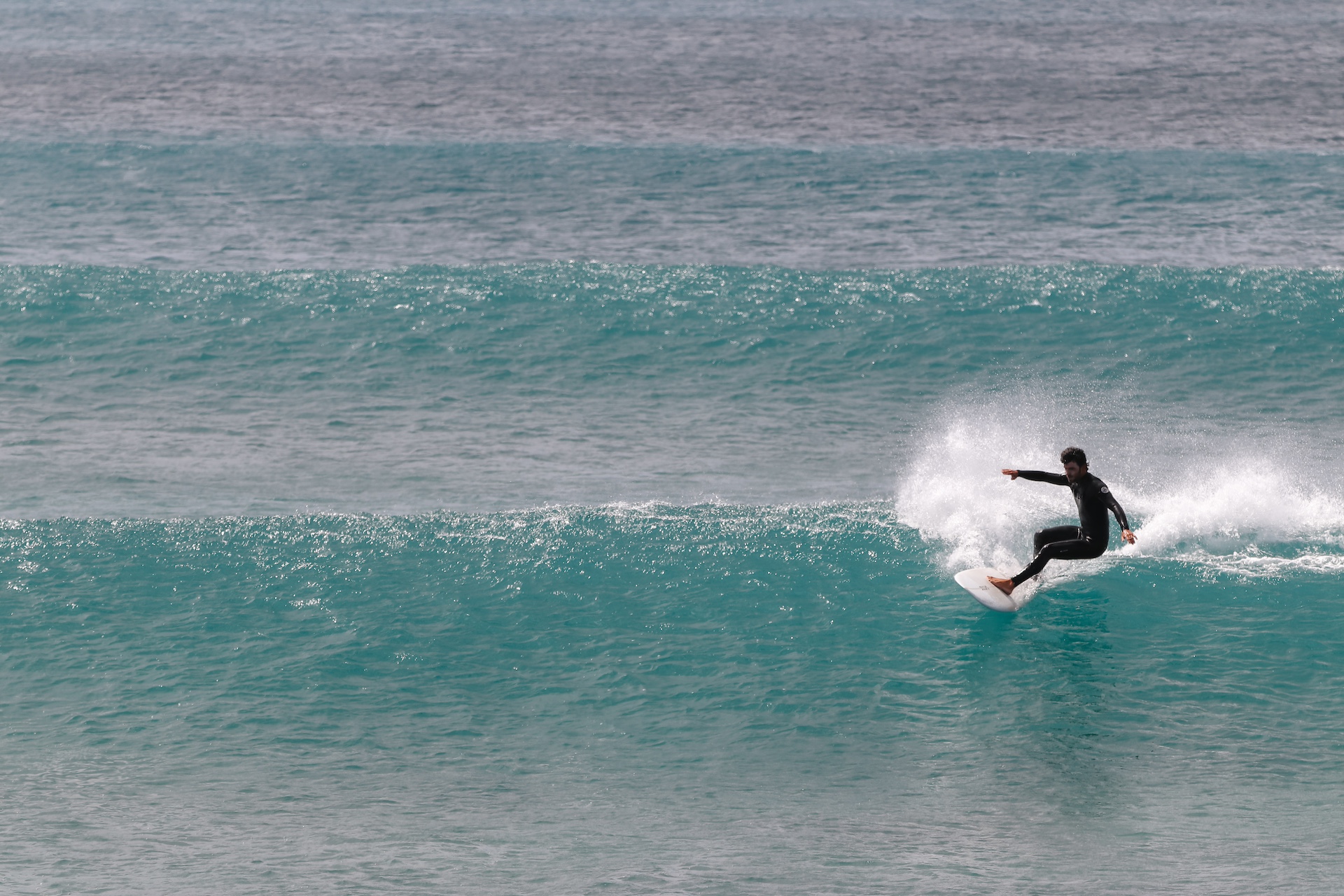
Once you are comfortable standing up, turning both ways and applying basic surf etiquette without having to think about it, Punta Blanca on Fuerteventura’s North Shore is a spot worth exploring. It is a reef break, with the wave breaking over volcanic rock rather than sand, but it has a mellow, forgiving character that makes it accessible to confident beginners and early intermediates, not just advanced surfers.
It is a favourite among longboarders, and on the right day, shortboarders enjoy it just as much. The outside section tends to suit
more experienced surfers, while the inside is generally more approachable for those still progressing through the intermediate
stages.
Punta Blanca also has the advantage of holding up well in a wide range of conditions. While it works best with a north swell, it also holds west, northwest and northeast swells reasonably well, and it handles most wind directions without losing quality. The only exception is genuinely strong wind, when the spot becomes better suited to windsurfing than surfing.
For More Experienced Surfers: Majanicho and Punta Elena
Once you are ready to explore reef breaks that demand more experience, two spots stand out on the north of the island.
Inside Bahía de Majanicho, the right hand wave on the inner side of the bay works well for intermediate surfers riding hard boards, particularly longboards. Because it sits inside a sheltered bay, big winter swells lose most of their power by the time they reach this inside section, making it surfable even when the open ocean is firing. It holds most wind directions well, though it is worth checking conditions in advance as it is also popular among wing foil, windsurf and kite surfers.
Punta Elena, known to visitors as Rocky Point but properly called Punta Elena, is a reef break near Corralejo, close to Waikiki beach. On its best days, with a clean north to northwest swell, the inside section offers a wave suited to intermediate and advanced surfers. The outside section is a different level entirely, reserved for advanced surfers riding mid length boards or stand up paddle boards, and it demands real experience, not casual weekend paddling. Punta Elena is best known for its right, although it breaks left as well.
Final Thoughts on Surf Spots in Fuerteventura
Fuerteventura offers a genuine variety of waves, from soft sandy beach breaks perfect for learning, to reef setups that reward experience and local knowledge. Matching the right spot to your level, and to the conditions of that specific day, is often what separates a great session from a frustrating one.
If you would like guidance choosing the right Surf Spots in Fuerteventura for you, get in touch and let’s talk about your surfing.
And once you’ve picked your spot, timing your trip right matters just as much — check out our complete guide on the Best Time to Surf in Fuerteventura to plan around the right swell and wind.